Instructional Design
January 27, 2015
 Source: PBS
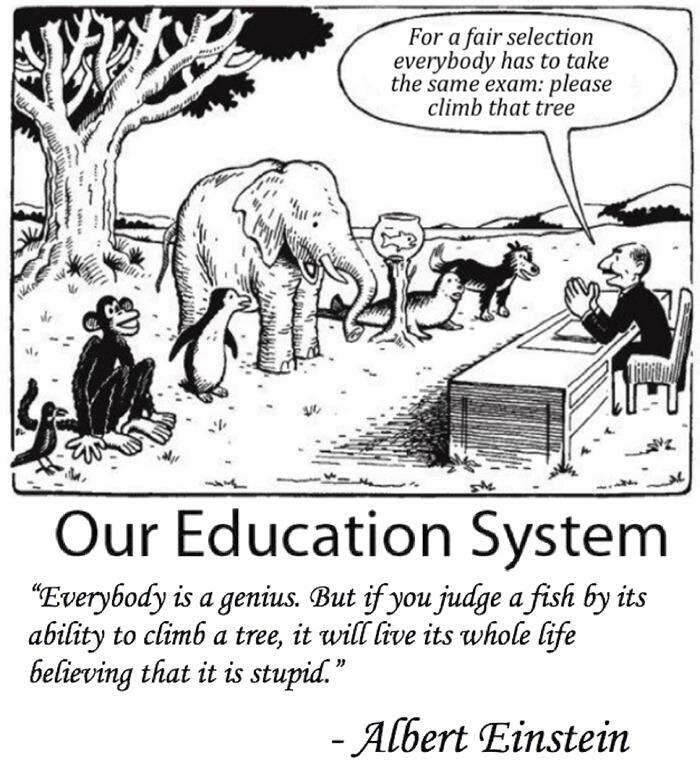
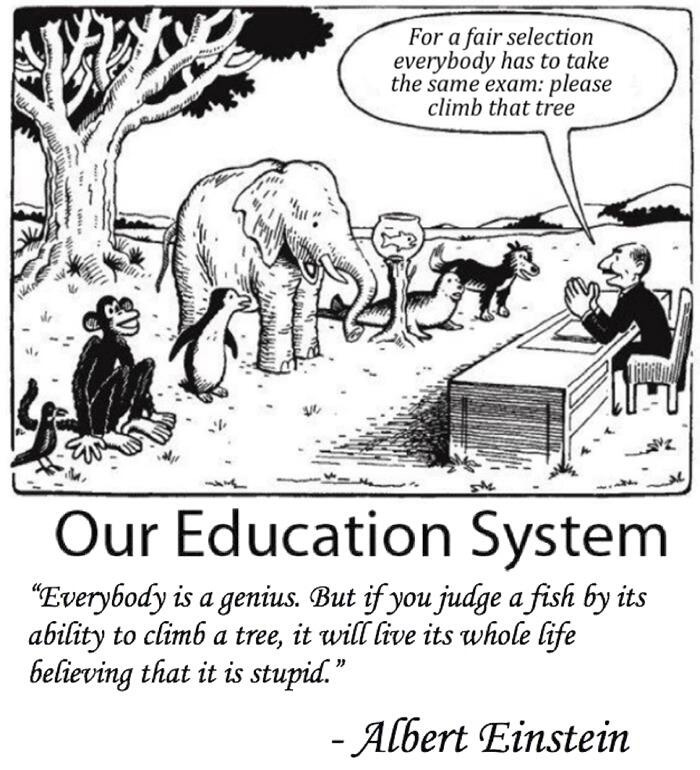
Perhaps you’ve seen this comic make its rounds on the internet.
Sure, we quickly see the absurdity in asking an elephant to climb a tree, and the commentary of our unjust education system and standardized testing warrants a good giggle.
However, let’s use this image for just a moment to talk more deeply about the practicalities of assessment design in the everyday classroom outside of mandated standardized testing. Notice that in this assessment only the learner’s activity is communicated: climb the tree. This seems straightforward enough. We tell our students to “write a report,” “create a presentation”, or “build a model.” But do we always tell them everything they need to know to be successful?
The conditions under which the animals will climb the tree and how they will be graded are not communicated by the teacher. Do you ever do this to your students? Do you ask your students to prepare a presentation and forget to share with them your plans for measuring the quality of their work? Let’s go back to the comic. What if I told you that these learners were required to climb the tree; however, the grade each animal earns on the task will be measured based on the following criteria:
Source: PBS
Perhaps you’ve seen this comic make its rounds on the internet.
Sure, we quickly see the absurdity in asking an elephant to climb a tree, and the commentary of our unjust education system and standardized testing warrants a good giggle.
However, let’s use this image for just a moment to talk more deeply about the practicalities of assessment design in the everyday classroom outside of mandated standardized testing. Notice that in this assessment only the learner’s activity is communicated: climb the tree. This seems straightforward enough. We tell our students to “write a report,” “create a presentation”, or “build a model.” But do we always tell them everything they need to know to be successful?
The conditions under which the animals will climb the tree and how they will be graded are not communicated by the teacher. Do you ever do this to your students? Do you ask your students to prepare a presentation and forget to share with them your plans for measuring the quality of their work? Let’s go back to the comic. What if I told you that these learners were required to climb the tree; however, the grade each animal earns on the task will be measured based on the following criteria:
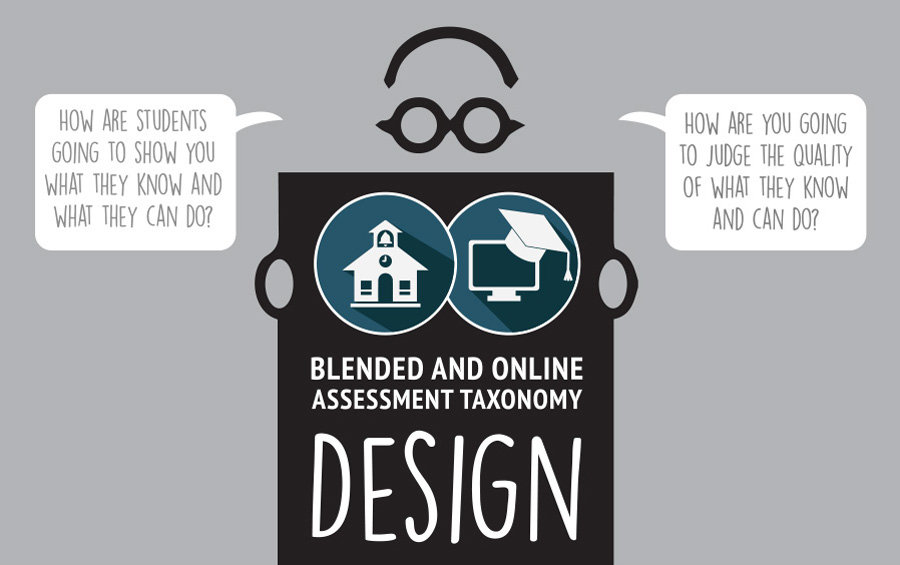
 In the infographic, Blended and Online Assessment Taxonomy, we have organized types of activities that suit various levels of assessments (2001) starting with remember, understand, and apply in the first row. Assessment activities like matching, multiple choice, and word problems fall among these lower levels of learning. Grading and feedback criteria for these levels of learning are very objective and include answer keys and checklists. One key advantage of using assessments in these levels is that often grading and feedback criteria are objective enough to be computer automated in the blended or online environment.
The second row of our infographic includes higher levels of active learning including analyze, evaluate, and create. Engaging curriculum whether face-to-face, blended, or online push student performances to these levels of learning; however, these assessments are less conducive to automated feedback systems as rubrics typically require intelligent judgment. The appropriate level of learning for any assessment should be determined by the learning objective(s).
Full Size Image
In the infographic, Blended and Online Assessment Taxonomy, we have organized types of activities that suit various levels of assessments (2001) starting with remember, understand, and apply in the first row. Assessment activities like matching, multiple choice, and word problems fall among these lower levels of learning. Grading and feedback criteria for these levels of learning are very objective and include answer keys and checklists. One key advantage of using assessments in these levels is that often grading and feedback criteria are objective enough to be computer automated in the blended or online environment.
The second row of our infographic includes higher levels of active learning including analyze, evaluate, and create. Engaging curriculum whether face-to-face, blended, or online push student performances to these levels of learning; however, these assessments are less conducive to automated feedback systems as rubrics typically require intelligent judgment. The appropriate level of learning for any assessment should be determined by the learning objective(s).
Full Size Image